

Medical device manufacturers face a global tightening of clinical evidence expectations. The FDA has raised pre-market requirements for select 510(k) submissions and pushed for more real-world evidence, EU MDR has narrowed how far clinical equivalence can carry a submission, and China has introduced its own population-specific clinical data requirements. The direction across all three is the same: more rigorous, multi-jurisdiction clinical evidence.
What Is Driving Stricter Clinical Data Requirements Across the US, EU, and China?
Three regulatory shifts explain the trend. The FDA now expects more pre-market data and real-world evidence for select 510(k) submissions. The EU MDR has made clinical equivalence claims harder to sustain, requiring stronger pre-market data and Post-Market Clinical Follow-up (PMCF). China has added its own clinical data rules, reflecting its own population, for both pre- and post-market phases.
A growing number of other jurisdictions are following the same path. In the late 2010s and early 2020s, manufacturers, constrained in part by the pandemic, mostly worked with the clinical data they already had, refining it or adding post-market studies aimed at market penetration rather than compliance. That has changed. With the pandemic behind the industry and regulatory expectations still rising, manufacturers are now investing directly in pre- and post-market clinical trials designed for compliance from the outset.
Which Therapeutic Areas Show the Most Clinical Trial Activity?
Analysis of Qserve's Contract Research Organization (CRO) project pipeline shows clinical trial activity concentrated in cardiovascular, wound care, and ophthalmic devices. These categories combine higher risk classifications with the potential for serious or immediate health consequences, which pushes manufacturers toward more robust clinical evidence. Orthopedic devices, though also medium- to high-risk, rely instead on long-established clinical registries.
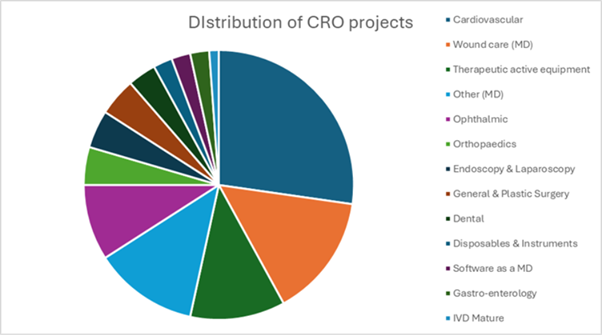
Figure 1: Type of CRO projects, divided by therapeutic area. Source: Qserve CRO Project Database.
That pattern isn't a gap in regulatory attention toward orthopedics. It reflects a field with a long history of registry-based post-market data collection and performance monitoring, built well before the current push for more clinical evidence elsewhere.
How Do Cardiovascular Studies Split Between Pre- and Post-Market?
Within Qserve's cardiovascular caseload, pre- and post-market studies split almost evenly, with a slight lean toward post-market. Pre-market studies typically support innovative or first-of-type devices from a given manufacturer. Post-market studies more often aim to keep an existing product on the market or extend clinical data to support entry into additional jurisdictions.
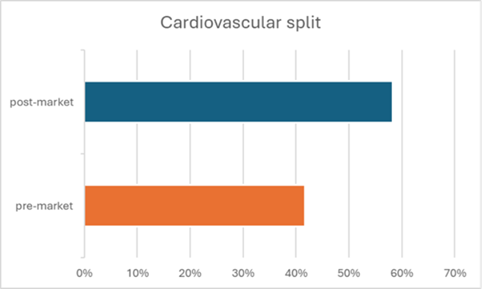
Figure 2: Breakdown of study types for cardiovascular projects. Source: Qserve CRO Project Database.
Can Clinical Data From Outside the EU Support an MDR Submission?
Clinical data generated outside the EU — whether pre- or post-market — can support an EU MDR submission if a manufacturer can justify five conditions: matching intended purpose and indications, an equivalent patient population, an equivalent standard of care, compliance with ISO 14155:2026, and a scientifically sound investigation design. Where any condition isn't met, an add-on clinical study in the EU is typically required.
- Intended purpose and indications are the same
- Patient population is equivalent
- Standard of care with the device is equivalent (for example, hospital stay or post-treatment medication)
- The clinical investigation is performed according to ISO 14155:2020
- The design of the clinical investigation is scientifically sound
A similar principle applies in the US, though the FDA typically requires more US-originated clinical data than a Notified Body would require from the EU.
How Should Manufacturers Plan a Multi-Jurisdiction Clinical Strategy?
Manufacturers planning to market a device in multiple jurisdictions should build one clinical strategy that accounts for all of them from the start, rather than designing a separate clinical investigation per market. Early planning toward a shared program is what keeps a multi-jurisdiction clinical effort cost-efficient rather than duplicative.
Pre-market studies were historically run as stand-alone efforts per market. That's shifting: manufacturers are increasingly connecting separate studies into a single multi-geography clinical program, using shared data and infrastructure across jurisdictions wherever the regulatory requirements allow it.
Talk to Qserve's CRO Team
Qserve's CRO team supports manufacturers building a stronger clinical baseline for exactly this kind of multi-jurisdiction planning — from a strategic review of your existing clinical data against a specific market, to repositioning or rewriting existing clinical evidence, to designing and running the pre- and post-market studies themselves.
Contact us today to explore how our CRO experts can help strengthen your clinical strategy and accelerate your path to market.

Qserve guides manufacturers with regulatory expertise, Notified Body selection, CE compliance support and strategic insights for faster approval.

What to evaluate before selecting an eTMF — cost, implementation time, CTMS integration, and how to stay inspection-ready under ISO 14155 and GCP.

Meet Iris Verboven, Business Operation Mangaer at Qserve CRO, whose practical approach ensures the best-fit solutions for your clinical trials.